Why most Indian diet plans fail
They are culturally unsurvivable. A plan built on quinoa, oats and grilled chicken breast asks an Indian household to cook two separate meals indefinitely. That lasts about three weeks.
They also target the wrong variable. Rice gets banned while the three tablespoons of oil in the sabzi go unmentioned — even though the oil contributes more calories than the rice does. Attacking the visible carbohydrate and ignoring the invisible fat is the central error of Indian diet advice.
And they under-deliver protein, which is why people on them lose muscle, stall, feel awful and quit.
You do not have to give up rice or roti
Rice is not the reason for India's metabolic problem. Total energy intake, oil, sugar, portion creep and inactivity are. Rice has been a staple here for millennia; obesity rates are recent.
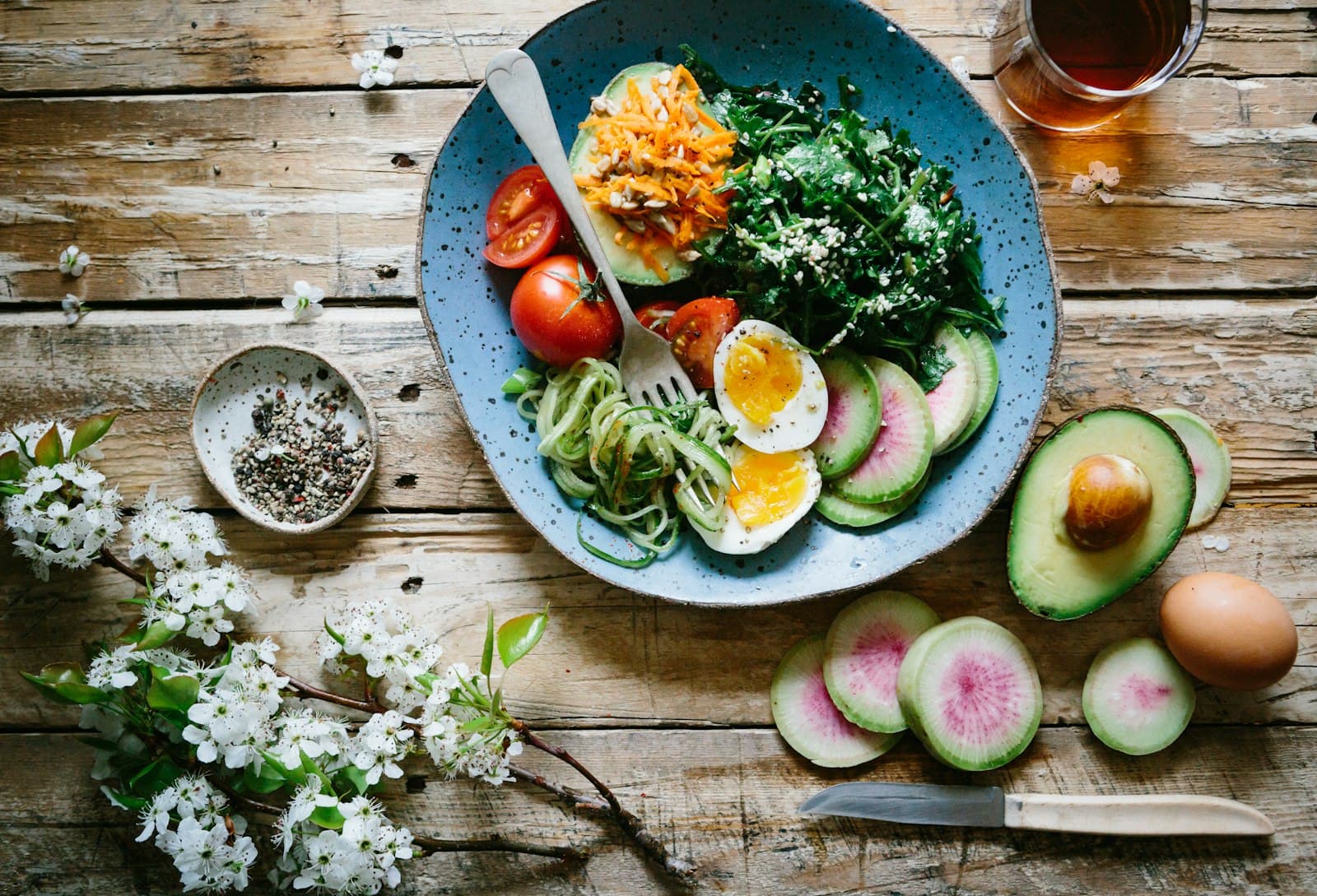
What changes is the proportion. Instead of a plate that is mostly rice with a little dal and a token vegetable, aim for roughly half the plate as vegetables, a quarter as protein (dal, rajma, paneer, curd, egg, chicken, fish), and a quarter as your grain. Same foods, same kitchen, different ratios.
Pairing matters too: rice eaten with dal, vegetables and curd produces a gentler glucose response than rice eaten largely on its own.
Measure the oil — it is the biggest lever in an Indian kitchen
One tablespoon of any cooking oil is about 120 kcal. Ghee, mustard oil, coconut oil, refined sunflower — all essentially the same number. Cooking a sabzi with a free pour instead of a measured two tablespoons routinely adds 200–300 kcal to a single dish.
Across a day of Indian cooking, measuring oil is frequently worth more than every other change combined, and it requires giving up nothing.
Diet advice that works vs advice that does not
- Give up rice entirely — fails, unsustainable. Instead, reduce the portion and keep the meal.
- Switch to brown rice — marginal. Portion and pairing matter far more than which grain.
- Skip dinner — fails, drives evening bingeing. Eat a normal, protein-led dinner instead.
- Cut oil to zero — fails, food becomes inedible. Measure 1–2 tbsp per dish instead of banning it.
- Detox teas or juices — no evidence behind them. Spend that effort on protein and water instead.
- Ban sugar completely — rarely sustained. Reduce frequency and keep the occasions that matter.
The pattern: advice that removes a staple tends to fail on adherence, and advice that changes proportions tends to hold.
What does a high protein Indian diet look like?
A standard Indian vegetarian day lands most people well under 50 g of protein. During weight loss the requirement goes up, to roughly 1.6–2.0 g per kg of body weight — so a 70 kg person needs something like 112–140 g. That is a large gap.
Closing it means treating protein as the anchor of each meal rather than an afterthought: bigger dal servings, rajma and chana in rotation, paneer or soya in place of some of the vegetable, curd at more than one meal, eggs if you eat them. Work out your target here.
What does a 1200 calorie Indian diet plan look like?
1200 kcal is a low target — appropriate for some people, too aggressive for others depending on size, activity and how much weight there is to lose. Confirm your own number with the TDEE calculator and the calorie deficit calculator before following one blindly. The sample day below (built from the values on our calorie counter) shows the shape such a plan can take without banning rice, roti or oil outright.
What is a good veg diet plan for weight loss in India?
The template above works unchanged for a vegetarian plate — the only adjustment is which quarter fills the protein slot. Rotate dal, rajma, chana and soya through the week rather than repeating one, add paneer or curd where the budget allows, and treat eggs as vegetarian-adjacent if you eat them, since they close the protein gap fastest.
The failure mode is specific to vegetarian plates: without a deliberate protein anchor, a vegetarian “diet plan” quietly becomes a carbohydrate-heavy one — more rice and roti to feel full, less dal and paneer because they take more effort to cook. Fix the protein first and the rest of the plate follows.
What is a good Indian breakfast for weight loss?
A protein-led breakfast — eggs, besan chilla, paneer bhurji, sprouts, or curd alongside a smaller portion of idli, dosa or poha — keeps you fuller for longer than a carbohydrate-only one (parathas alone, or poha and upma without a protein side). Front-loading protein at breakfast is easier than trying to catch up on it later in the day, especially if appetite is already reduced on a GLP-1.
You do not need to give up South Indian or North Indian breakfast staples — 2 idli with a katori of curd, for instance, comes to roughly ~210 kcal with a reasonable protein hit, using the values on our calorie counter.
A structure that survives real life
Rather than a rigid day-by-day chart you will abandon, use a template you can apply to whatever is cooked at home:
Breakfast — protein-led. Eggs, besan chilla, paneer bhurji, or curd with a smaller portion of poha or upma. Front-loading protein is easier than back-loading it, especially on a GLP-1.
Lunch — half vegetables, a quarter protein, a quarter grain. Measured oil.
Evening — the meal where most plans quietly collapse. Have a planned option (roasted chana, curd, fruit, a boiled egg) so the decision is already made when you are tired.
Dinner — same shape as lunch, usually lighter on grain.
Festivals, weddings and eating out are not failures of the plan; they are part of the year. A plan that cannot absorb them is not a plan.
A sample 1200 kcal Indian diet plan (approximate)
| Meal | What's on the plate | Approx. calories |
|---|---|---|
| Breakfast | 2 idli + 1 katori curd | ~210 kcal |
| Lunch | 2 roti + 1 katori dal + 100 g paneer + 1 tbsp oil | ~775 kcal |
| Dinner | 1 katori cooked rice, with vegetables | ~200 kcal |
Approximate figures from the food values on our calorie counter, for planning only — actual calories depend heavily on portion size and how much oil is used. This is one example shape, not a prescription; confirm your own target with the TDEE and calorie deficit calculators.
Every patient arrives having already tried giving up rice. It is the first thing they did and the first thing they stopped doing. We start by putting it back on the plate — a smaller portion, next to more dal — and the plan survives contact with their family kitchen.